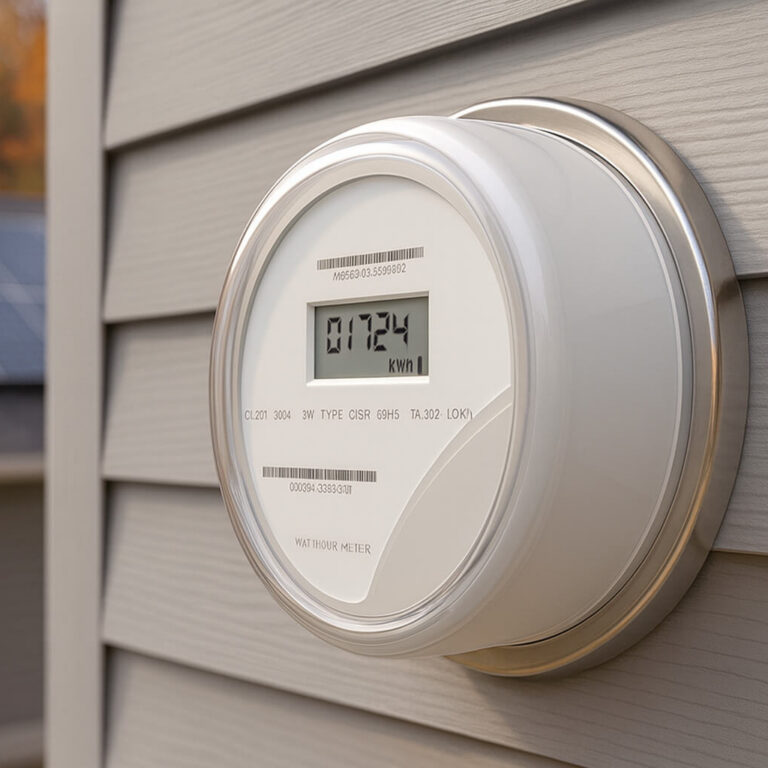

How Net Metering Works – The Basics
Learn the basics of net metering, how solar credits work, and what to know before exploring solar in Massachusetts.
Big news for Massachusetts homeowners: the state just raised the limit on how much solar you can install and still earn full retail credits. Here’s what the 2025 net metering expansion means for your energy savings in Western Mass.

Massachusetts has long led the way in clean energy policy — and the state just gave solar homeowners another reason to celebrate.
As of February 2025, the Department of Public Utilities expanded the size limit for automatic net metering eligibility, making it easier for more households to earn full credit for the power their panels produce.
Before this update, residential systems up to 10 kW AC qualified for net metering without hitting the statewide “cap.”
Now, systems up to 25 kW AC are automatically eligible.
That means:
This expansion stems from the Massachusetts Climate Bill signed in August 2022 — a law that took more than two years to be fully implemented through the updated net metering tariff.
This policy change helps Massachusetts families design solar systems that fit their growing electricity needs — not just what they use today.
With more homes adding:
…the jump from 10 kW to 25 kW gives homeowners the room to plan for a fully electrified lifestyle without losing eligibility for retail-rate net metering.
Here’s what the change could look like in real numbers:
The bottom line: more solar capacity means more credits — and more savings — especially as electricity rates keep climbing.
Net metering lets you earn credits for extra electricity your solar panels send back to the grid.
Those credits apply to your future bills — reducing supply, delivery, and even fixed charges.
Massachusetts offers one of the best versions in the country:
Learn more about how net metering works.
While Massachusetts just expanded its program, several other states have moved in the opposite direction.
California, Hawaii, and over a dozen others have replaced retail net metering with “net billing”, which credits exported solar at much lower wholesale rates.
If Massachusetts ever followed suit, a typical Western Mass homeowner could lose $50,000–$100,000 in lifetime solar savings.
That’s why locking in today’s policy — guaranteed for 25 years once your system is installed — is so important.
“This expansion is great news for Western Mass homeowners,” says the Valley Solar design team.
“It gives people more flexibility to size systems for future needs — whether that’s charging an EV or heating their home with a heat pump — without worrying about hitting a cap.”
For customers served by Eversource, National Grid, or Unitil, this update means you can confidently install a system up to 25 kW AC and receive the same full retail net metering benefits as before.
Learn the basics of net metering, how solar credits work, and what to know before exploring solar in Massachusetts.