

Massachusetts Net Metering & Utility Rules
Net metering isn’t just another rule buried in utility paperwork. It determines how extra energy from your solar panels is credited back to you on your electric bill.
This guide explains how net metering works in Massachusetts, so you can move forward with clear expectations and without confusion or sales pressure.
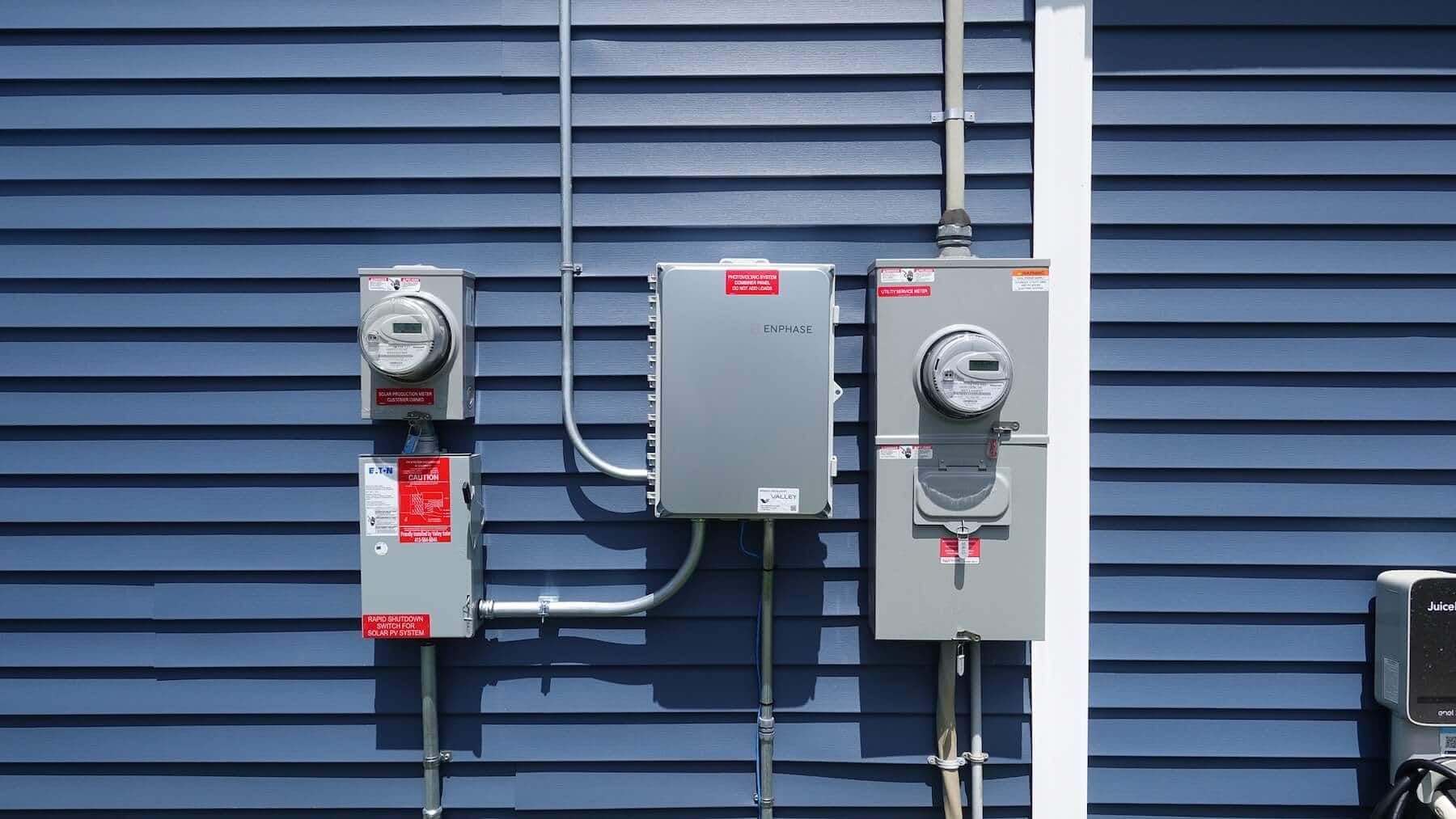
What net metering is (simple example)
On a sunny summer day, your system may produce more electricity than your home is using. That excess electricity is sent to the grid and recorded as bill credits.
Later, at night or during a lower-production month, your home may use more electricity than your system produces. Those credits are applied to your bill to offset that usage.
This allows electricity produced at one time to be credited against usage at another.
Important:
- Net metering does not change how much electricity your home uses.
- It changes how that electricity is credited and balanced over time.
How net metering credits work in Massachusetts
When your solar system produces more electricity than you use:
- The excess power is sent to the grid.
- Your utility measures it and assigns it a value under net metering rules.
- That value shows up as bill credits on your account.
- Those credits are used when your system produces less than you use.
Retail-style crediting
In Massachusetts, when you send extra solar energy to the grid, you receive bill credits at close to the same rate you pay for electricity.
The exact credit value depends on utility tariffs and rate components, but the structure is consistent statewide and typically results in credits at approximately 90% of the retail electricity rate.
Credit application and rollover
Under current rules, net metering credits:
- Apply across supply charges, delivery charges, and most fees and taxes
- Roll forward without expiration, so excess production in one period can offset usage in later months or even years
- Remain as bill credits on your account rather than being paid out as cash
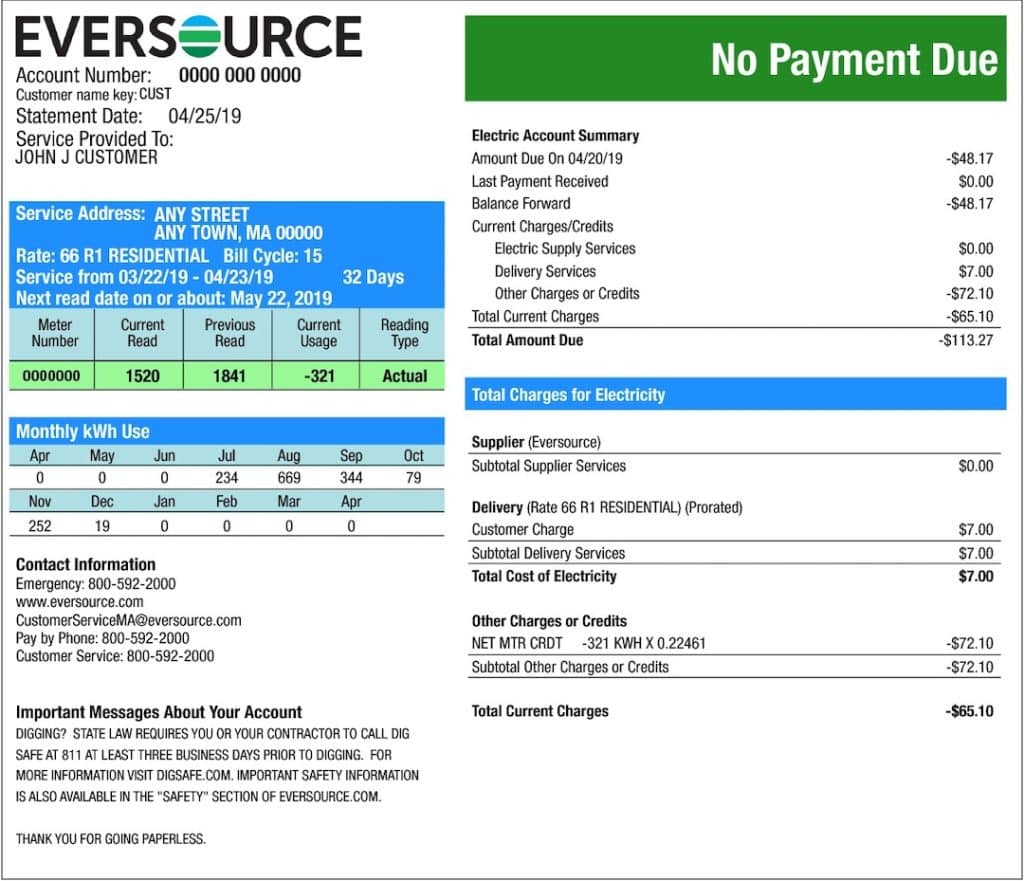
On your bill, you may see a credit in a month when more power was delivered to the grid than was consumed. That credit is carried forward and applied to future charges.
Below is a sample Eversource bill showing how credits are applied. A full explanation is available on the Eversource website for reference.
Seasonal production and credit rollover
Solar production and household electricity use do not always line up month to month.
What’s typical:
- You produce more energy in the spring and summer
- You have lower production in the fall and winter
Net metering allows the excess credits earned during high-production months to be used later in the year, smoothing out this seasonal imbalance.
Utility-specific net metering rules
Net metering follows state rules, but each utility manages it directly.
In Massachusetts, most homeowners are served by:
- Eversource
- National Grid
- Unitil
The core net metering structure is regulated across the state. However, utilities may differ in:
- How bills are laid out
- How your system is approved and connected to the grid
- How credits appear on your monthly statement
In this guide we focus on the shared statewide rules, not the specific management details of each utility.
Net metering caps and eligibility
Massachusetts limits how much solar across the state can qualify for net metering credits. This overall limit is called the statewide cap.
Some systems qualify automatically and do not count against that cap. These systems are considered cap-exempt.
As of February 2025:
- Residential systems up to 25 kW AC qualify automatically for net metering
- The previous automatic limit was 10 kW AC
This means residential systems up to 25 kW AC are considered cap-exempt. They qualify for net metering without being affected by the statewide cap.
Homeowners installing systems within that size do not need to worry about whether there is remaining cap space.
System size, export limits, and constraints
Qualifying for net metering does not mean your system can export unlimited power to the grid.
Even if your system is eligible under the statewide cap, there may still be limits based on your property and local grid conditions.
Possible constraints include:
- Utility limits on how much power can be sent to the grid
- The capacity of your home’s electrical service
- Local infrastructure conditions
These factors are reviewed during the approval process when your system is evaluated for connection to the grid. The outcome can vary by property.
Rule stability and grandfathering
Massachusetts net metering rules include long-term protections for systems installed under current policies.
If your system is approved and placed in service under today’s rules, it keeps those rules.
Under current regulations:
- Systems are “grandfathered” under the rules in effect at the time they are connected
- This protection lasts for a defined multi-decade period
What net metering does not determine
Net metering rules explain how your utility credits electricity. They do not answer every question about whether solar makes sense for you.
Net metering alone does not determine:
- Whether solar will save you money
- How large your system should be
- Whether you need a battery
- How you should pay for solar
Those decisions depend on factors beyond utility rules.
Related Guides
How Should I Compare Solar Quotes?
How Should I Pay for Solar?
A Note on Working With Valley Solar
At Valley Solar, we help homeowners understand how net metering and utility rules apply to their specific home and utility account. Our role is to provide clear explanations so decisions are made with accurate information, not assumptions.
If you have questions about how net metering appears on your bill or how your utility manages credits, our team can provide clarification. Contact our team for support.